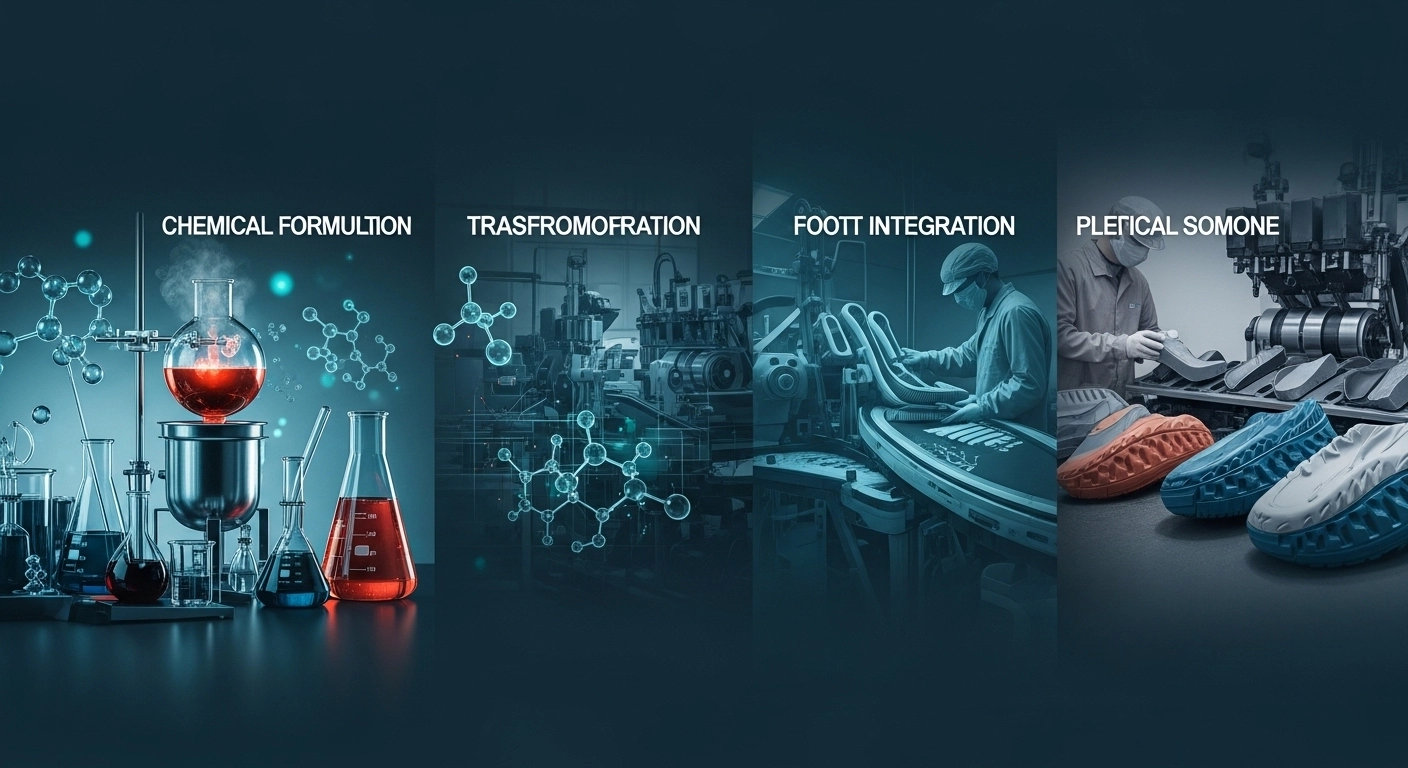
Chemical formulation is the absolute scientific backbone of modern footwear manufacturing. Every single distinct component of a shoe—from the dense rubber outsole, to the expanding EVA midsole, all the way down to the invisible micro-adhesive bonding layers—is strictly the result of precision chemical engineering. Simple errors in formulation directly trigger catastrophic sole delamination, severe colour bleeding, poor grip degradation, and horrific product returns that can easily devastate a brand's hard-earned market reputation. This comprehensive technical guide by DCC covers the exact core chemical systems mandated in global footwear manufacturing.
What Is Actual Chemical Formulation in Footwear?
To simply define it: chemical formulation in footwear refers to the complex and precise mixing of raw base polymers, specialized plasticisers, density fillers, thermal stabilisers, exact colourants, and critical processing aids designed to yield materials presenting hyper-specific performance properties. Each custom formulation must be fundamentally engineered for its exact target application—be it midsole shock cushioning, extreme outsole abrasion durability, upper-shell flexibility, or permanent sole-to-upper thermal adhesion.
Key Chemical Systems Deployed in Footwear
Understanding these critical compounding categories provides plant owners with massive operational advantages over generic supply-chain reliance.
The definitive formulation standard for cushioned midsoles. The sheer vinyl acetate (VA) level dictates overall softness: elevated VA results in substantially softer and more flexible compound foam. Optimal midsoles require 18–28% VA content paired accurately with potent blowing agents (like azodicarbonamide) for perfect foam expansion mechanics.
Heavy-duty TPR outsoles fundamentally employ raw SBS (Styrene-Butadiene-Styrene) or SEBS (Styrene-Ethylene-Butylene-Styrene) as the foundational polymer structure. Micro-fillers like calcium carbonate and pure carbon black are integrated with exact processing oils to strictly achieve target impact-hardness, color stability, and severe environmental aging resistance.
These rigid compounds demand extremely intense plasticiser curation. Traditional DOP has aggressively been retired in favor of high-tier non-phthalate alternatives (such as DINCH or TOTM) specifically to pass brutal REACH export compliance laws. Heavy-metal stablisers (calcium-zinc based) operate to prevent fatal thermal degradation within the machinery path.
Sole-to-upper bond failures remain the singular most frequent quality collapse. Modern high-output structures rely on exact polyurethane (PU) adhesives heavily pre-treated with chemical primers. While traditional chloroprene contact cement dominates domestic factories, DCC exclusively mandates water-based PU sequences to secure massive export-tier approvals.
Common Formulation Failures (& How to Annihilate Them)
Relying on "guesswork" chemistry leads directly to the following severe production-line failures. Fortunately, applying standard chemical engineering algorithms fixes them permanently:
- Sole Micro-cracking: Predominantly caused by dangerously insufficient bulk plasticiser integration or radically incorrect moulding temperatures.
→ Solution: Immediately adjust the master formulation balance and strictly audit your mould heat sensors. - Colour Bleed & Migration: Frequently induced by introducing cheap, non-stable pigment agents.
→ Solution: Permanently switch raw procurement specifically to heat-stable, premium inorganic chemical pigments. - Sole Edge Delamination: Directly triggered by erratic adhesive activation temperature fluctuations.
→ Solution: Standardise uniform thermal cement application and immediately enforce strict flash-off timing protocols. - Chemical Blooming (White Powder Surface): Sourced from utilizing massive excess stearic acid, causing slow sulphur chemical migration over time.
→ Solution: Conduct a deep formulation audit review to re-balance the stearic thresholds. - Mould Shrinkage & Warping: Almost universally caused by wildly incorrect cooling cycle intervals locked into the moulding unit.
→ Solution: Systematically extend the exact cooling cycle intervals by 15–20 full seconds across the board.
DCC's Expert Chemical Formulation Service
DCC provides absolute custom formulation development architecture tailored specifically for EVA, robust TPR, PVC, and dense rubber sole compounds. Our deep laboratory testing infrastructure physically verifies critical hardness thresholds (Shore A/C), extreme abrasion defense parameters (DIN 53516), active flex resistance capacity (Ross flex test protocols), and long-term aging viability curves. Most importantly, we provide complete algorithmic formulation documentation and global supplier qualification support.
FAQs — Precision Chemical Formulation
In industrial chemistry, a compound represents the final physically mixed raw material that is wholly ready for direct injection moulding procedures. Conversely, a formulation serves as the master engineering recipe itself—representing the exact hyper-precise percentage ratios of sheer raw materials required to properly yield that compound.
If your factory floor is actively experiencing overall quality rejections consistently soaring above the 2% warning margin, unpredictable physical material cost variability between batch outputs, or direct field customer complaints regarding physical durability—your existing formulation algorithms desperately require immediate optimisation tuning. Contact DCC's lead engineers for a comprehensive free audit analysis.
Ready to transform your footwear formulations?
Cease operational bleeding caused by guesswork chemistry. Partner directly with India's lead industrial chemical engineers today.
Book Technical Consultation