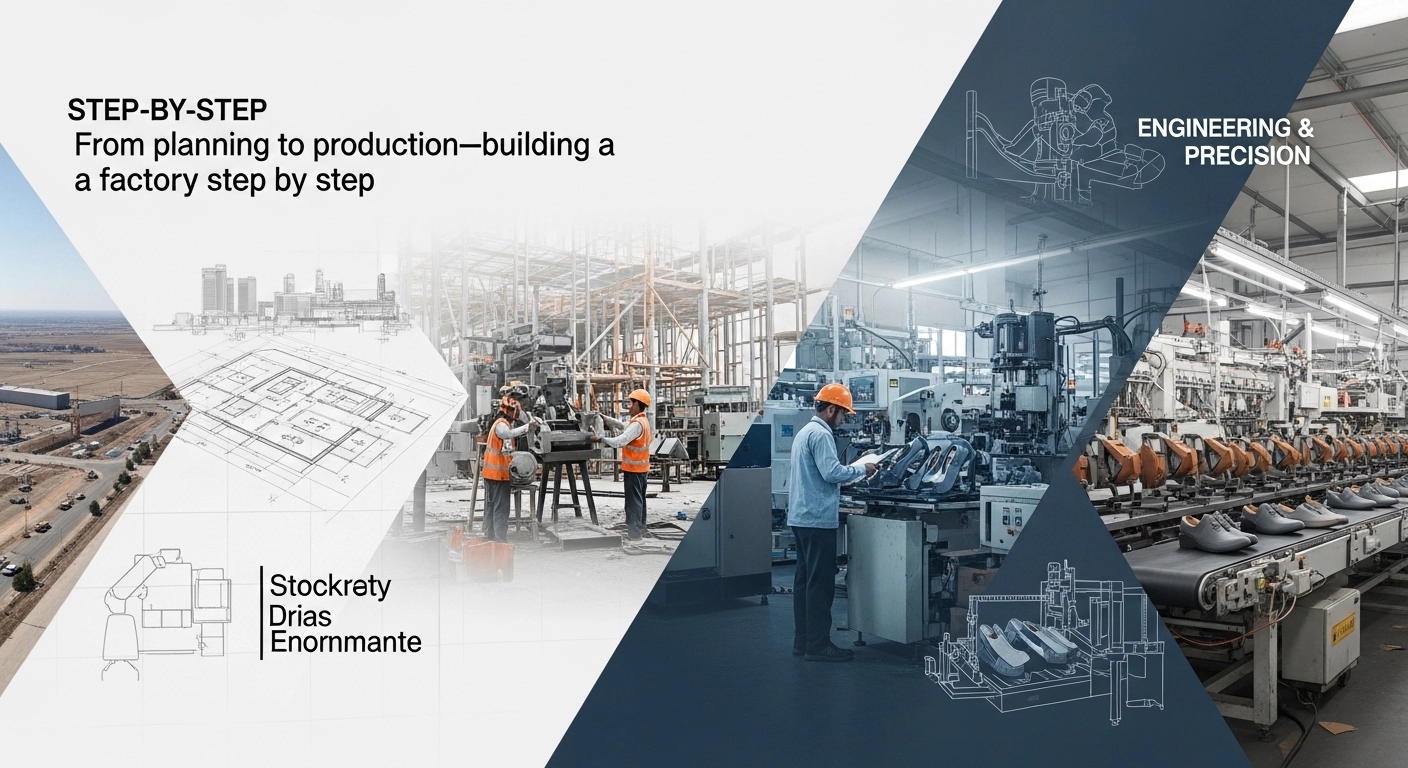
Setting up a footwear manufacturing plant in India is one of the most rewarding — and deeply complex — industrial ventures you can possibly undertake. India's footwear sector is the second largest in the world, producing over 2 billion pairs annually with demand surging at 8–12% per year. However, a poorly planned factory layout can easily cost you 12–18 months of launch delays and severe budget overruns. This comprehensive guide by DCC (Dixit Chemical and Consultation) walks you through every precise step required to launch a fully compliant, highly profitable unit.
Step 1: Define Your Product Category and Market Segment
Before any physical walls go up, you absolutely must define your manufacturing target. Are you going to mass-produce EVA sports shoes, formal leather batches, injected rubber sandals, or extreme-certified safety footwear? Each distinct category fundamentally shifts your core chemical flow, sheer automation machinery limits, and standard regulatory compliance strategies.
- Sports/Casual: Requires EVA foam injection moulding mixed seamlessly with robust stitching assembly lines.
- Formal Leather: Centered heavily upon precise lasting, cementing, and extreme finishing detail lines.
- Rubber/PVC Sandals: Relies entirely on rapid-fire injection moulding or heavy-pressure compression setups.
- Safety Work Footwear: Mandates complex steel toe cap integration operations, paired directly with ISO/BIS IS 15298 testing standards.
Step 2: Select the Strategic Geographic Location
India's mega footwear supply chains are hyper-concentrated in specific regional industrial corridors. Establishing your factory in the right cluster immediately provides vast raw material proximity buffers and highly skilled regional labor.
Step 3: Factory Space Planning & Workflow Blueprint
An architecturally and chemically sound factory layout drops internal physical material travel time by a radical 40%, directly scaling day-one worker productivity, while automatically locking in state inspector compliance measures.
- Regulated Raw Material Buffer Centers (Strict hazard handling for chemical compounds & volatile cements).
- Primary Tool Cutting Zones (Rapid mechanical die stations or digital knife setups).
- Upper Shoe Assembly / Complex Stitching Lines.
- Lasting, Direct Cementing Application, and Heat Finishing Tunnels.
- Heavy Chemical Sole Moulding / Polymer Injection Pressure Arena (if producing independent soles).
- Air-Filtered Quality Control and Polymer Testing Labs.
- OSHA/Factories Act 1948 Compliant Worker Welfare safety zones.
Step 4: Industrial Automation & Machinery Procurement
Heavy equipment procurement is the precise stage where most founders either dangerously under-invest or suffer capital burnout. DCC's specialized engineers provide deep vendor due-diligence and global sourcing support across all crucial robotics and manual tiers:
Step 5: Master Chemical Procurement Setup
Make no mistake: modern footwear manufacturing is a profoundly chemical-intensive industry. Architecting an unbroken, highly vetted polymer supply chain is fundamentally critical to guaranteeing low yield-loss and cost scalability. DCC provides end-to-end master procurement strategies and independent formulation engineering for any custom EVA or TPR compound your designs require.
Step 6: Compliance Framework & Certification Locks
Before launching a single production line, rigorous documentation frameworks must be passed:
- Mandatory Safety Registration directly under the India Factories Act framework (1948).
- BIS Safety Certification Testing parameters specifically mapped to intense IS 15298 footwear laws.
- State Environmental N.O.C. strictly concerning internal operational toxic fumes and waste exhaust routing.
- MSME Integration granting access to core hardware subsidies and industrial tax relief schemes.
FAQs — Footwear Plant Setup in India
A baseline small-scale manufacturing unit—rated for a daily output of 500 to 1,000 pairs—traditionally requires a core capital injection ranging from ₹25 to ₹75 Lakhs. This variance aggressively depends on the physical location of the land, your baseline level of robotics automation, and whether the primary compound relies on simple PVC vs performance EVA. Our engineers at DCC construct meticulous custom Project Reports to pinpoint your exact ROI timeline.
Assuming raw land or building space is already leased, leveraging DCC's master implementation blueprints allows a fundamental manufacturing operation to securely transition from empty floor to successful live-run production tests within just 3 to 6 operational months.
Ready to transform your footwear plant setup?
Skip the painful trial-and-error costs. Partner directly with India's foremost chemical and manufacturing engineers today.
Book Technical Consultation